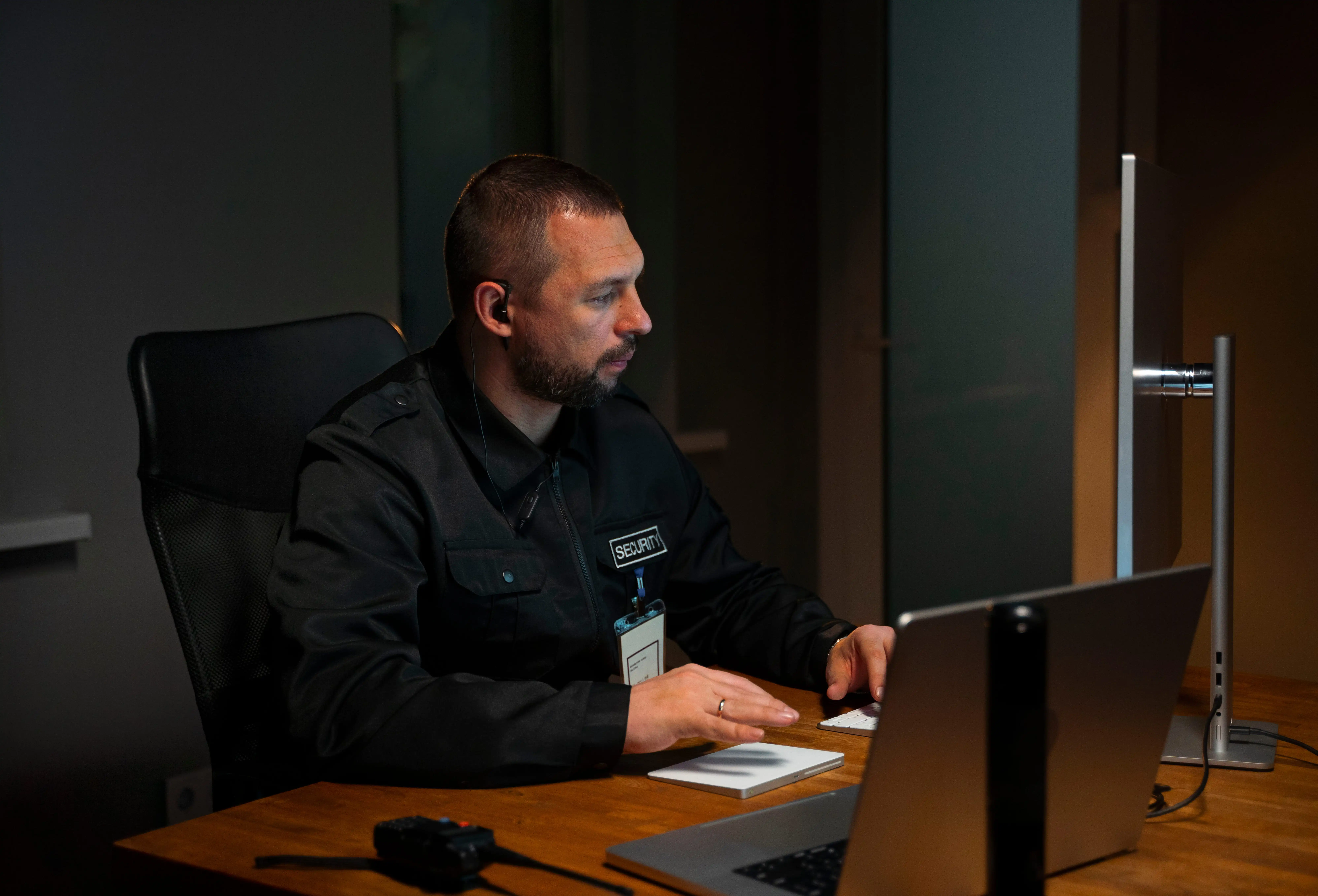
The Complete Guide to Corporate Security Services in India (2026)

Executive protection goes far beyond hiring a bodyguard. Learn what it includes, who needs it, and how CEOs, HNIs and public figures in Mumbai can choose the right close protection partner in 2026.
Indian businesses suffer annual losses amounting to crores of rupees due to theft, work-related accidents, and avoidable security failures, a situation generally arising because security has not received the attention it merits and has instead been regarded as an afterthought. As offices, factories, warehouses and retail shops are now common all over the country, corporate security services have changed from being a optional factor to one which is currently a top priority in the boardroom.
The same exposure extends beyond the office: executives, promoters and other high-value individuals increasingly need close protection, and the high-value residences and installations they own need security that matches the sites they operate. This guide offers all the information that a business owner, a facilities manager, or an HR/administration supervisor needs to know when selecting a corporate security company in India in 2026, covering the various types of services available, the real compliance requirements, and the factors that do influence the cost.
What Is Corporate Security and Why It Matters in 2026
Corporate security involves the various physical, procedural, and technological measures which a business adopts in order to guard its people, premises, assets, and information, and it is exactly at the point where manned guarding, electronic surveillance, access control, and risk management come together.
For most Indian companies,corporate security services cover:
- Protecting employees, visitors, and leadership on-site, including close protection for executives and other high-value individuals
- Safeguarding physical assets, inventory, equipment, cash, IT hardware
- Controlling who enters and exits a facility
- Monitoring premises around the clock through CCTV and patrols
- Responding to emergencies, fire, medical, civil disturbance, or intrusion
- Maintaining an audit trail for compliance and insurance purposes
By 2026 the situation has become more urgent. Since hybrid working arrangements have become more common, it is now more difficult to predict how many people will come to the office, e-commerce warehouses have therefore become attractive targets for attacks because of their high value, and as a result of the development of smart-city infrastructure there is now greater demand for technology-based security rather than relying on a guard who uses a logbook.
Moreover, because licensing regulations are enforced more strictly, companies can no longer regard their security vendor as a low priority since making the wrong choice now involves not only operational risks but also legal and reputational ones.
It is becoming increasingly apparent that security decisions made separately by individual facilities, by the human resources department, or by IT frequently result in shortcomings. For example, a facility may have sufficient guarding yet still fail to arrange a coordinated procedure with IT regarding access to the data centre; or it might have good CCTV coverage but have no set way of escalating matters to HR when an employee is involved in an incident.
The businesses that get the best return on their corporate security investments are those that from the beginning treat security as a matter which involves a number of different departments, rather than viewing it as something that should be the sole responsibility of facilities.
The State of Corporate Security in India: Market Size, Regulation & Demand Drivers
The private security industry in India is now one of the biggest employers in the organised services sector. The market is currently believed to amount to between $5 and $5.5 billion and is anticipated to reach between $9.5 and $14.8 billion by 2030; it is also said to offer a source of income for almost a crore of security personnel who work for more than 30,000 licensed agencies.
Demand has been increasing steadily since the 2008 Mumbai attacks and rose once more during the pandemic years, as companies came to the realisation that security should be regarded as essential infrastructure rather than as an overhead cost. Alongside this, growing numbers of high-net-worth individuals and promoter families are driving demand for close protection and secured high-value residences, a specialised segment that sits alongside, but is distinct from, standard corporate guarding.
Several factors are fuelling demand for corporate security services specifically:
- At whatever time IT/ITeS campuses, BFSI branches, and logistics parks are expanded, each new facility must have guarding, access control, and monitoring installed on the very first day.
- Because of the growth of e-commerce and the expansion of warehousing, there is now a greater demand for trained guards and surveillance services since a large amount of high-value inventory is stored in warehouses located in tier-2 and tier-3 cities.
- The Private Security Agencies (Regulation) Act of 2005has been introduced by PSARA in order to require all security agencies to hold a licence issued by the state, and the present measures intended to enforce these rules (a practice which is generally known informally as “PSARA 2.0”) are leading to greater standardisation among the agencies, higher wages, and training that has been verified.
- The insurance companies together with those concerned about compliance are applying pressure, as currently several corporate insurance policies and client contracts stipulate that security procedures should be documented as a condition of getting coverage.
- When it comes to spending on smart cities and infrastructure, both the public and private sectors include investments in surveillance, access control, and command-centre technology as part of their standard corporate security packages.
Any business which is assessing corporate security services in India should take away the lesson that this is a regulated and well-developed industry and that just as much care should be exercised when choosing a vendor as is done in the case of any other important service contract.
Types of Corporate Security Services in India
Since different types of businesses have different security requirements, you can exactly determine what your organisation needs by examining the various categories in question.
1. Manned Guarding
In India the most frequently used method of providing corporate security is to employ trained security guards at the entrance points, at the reception desks, in the parking areas and along the perimeter; the guards can be unarmed or armed (in the case of high-risk sites) and the shifts are generally organised on 8- or 12-hour rotations. Since the quality differs so greatly among the various security companies, background checks and training records are more important than the price quoted.
2. The use of electronic surveillance and CCTV for monitoring
At present, the strongest security programmes combine physical security with electronic security: CCTV coverage, video analytics, and remote monitoring stations working alongside guards rather than replacing them.
Leading providers now offer AI-enabled analytics and data-driven monitoring, motion detection, intrusion alarms, and people counting, feeding live, actionable inputs to guarding teams and control rooms rather than just recording footage for later review. This hybrid model, physical guarding paired with AI and data analytics, is increasingly the standard not only for corporate campuses but also for high-value residences and installations.
3. Access Control Systems
Every biometric attendance system, RFID card access system, visitor management software and turnstiles is capable of controlling both who enters a building and when they enter it. Layered access control is usually necessary in multi-tenant buildings or in manufacturing plants which have restricted areas.
4. Cash and Valuables in Transit (CVT)
Organisations such as banks, department stores and others that handle large amounts of cash depend on secure transport services, armed vehicles, trained guards and chain-of-custody records if they are to move cash and other valuable items safely between different locations.
5. The protection of executives and VIPs
Protecting executives, promoters and other high-value individuals is a specialised discipline in its own right. Beyond leadership travel, major events, or companies operating in sensitive sectors, it covers close protection and VIP protection delivered by trained personnel, arranged as long-term or short-term engagements, together with route and venue risk assessments.
The same expertise extends naturally to securing high-value residences and installations, where those same individuals and their families live and work.
6. About fire safety and emergency response
Corporate security contracts generally include fire watch duties, evacuation drills, and first-responder training since the guards are usually the first to be at the site in an emergency.
7. Investigating the backgrounds of employees and vendors
It has now become a standard extra step especially in cases where companies are dealing with sensitive data or have high-value assets this involving a pre-employment screening, a verification of the applicant's address, a criminal record check and reference checks.
In some cases, the companies' providers also carry out periodic re-verification for contract workers and for staff members of suppliers who have remained with the company for a long time, and not just conduct a single check at the time of onboarding, since risk profiles and personal circumstances can change during the course of a multi-year engagement
In India most medium and large companies make use of two or three of the measures listed, and in the case of a typical corporate office the standard approach is to combine manned guarding with CCTV monitoring and access control.
The warehouses will have perimeter fencing and patrol vehicles and bank branches will also have cash-in-transit and armed guarding. A supplier who is well informed is able to provide real value during the first site assessment.
Corporate Security by Industry: What Different Sectors Actually Need
The term “corporate security services” covers a wide range of options, the kind of security a BFSI branch requires is quite different from that needed by a logistics park. A few sector-specific features are worth being aware of before you carry out your own scoping:
IT/ITeS and Corporate Office Campuses
Usually, large technology parks and office complexes place more importance on access control, the management of visitors, and maintaining a professional image at the front desk than on having a large number of staff members. It is normal for such parks to use biometric or RFID entry systems, turnstiles, and integrated fire-safety systems, and many of the campuses operate their own control rooms which combine the CCTV feeds from the various tenants.
Manufacturing and Industrial Plants
Factories face a different kind of risk, including the theft of raw materials and finished goods, the need to manage contractor and vendor access, and adherence to safety regulations concerning heavy machinery. In this context, perimeter security, the monitoring of the weighbridge, and carrying out fire-watch duties are generally just as important as guarding the gates.
BFSI (Banking, Financial Services, and Insurance)
Bank branches and financial institutions have among the most stringent security requirements in the country, these being largely determined by guidelines from both the RBIand PSARA, and common practice including the use of armed guards at certain sites, cash-in-transit procedures, the need to retain CCTV footage, and alarm-linked response systems.
Retail and Shopping Malls
Retail security is characterised by a high volume of foot traffic, a high risk of shrinkage, and the presence of security guards who interact with customers. Core requirements include loss prevention, conducting bag checks, monitoring the point of sale through CCTV, and managing the crowds during sales or at festive times.
Warehousing and Logistics
E-commerce and 3PL warehouses in second- and third-tier cities are increasingly becoming a focus area, with large and often isolated sites storing high-value inventory, in which perimeter fencing, patrol vehicles, supervision at the weighbridge and at the docks, and 24 hour a day coverage are more important than a well-presented front desk.
Co-Working Spaces and Multi-Tenant Buildings
The key design considerations should be security that is able to handle multiple tenant companies which are constantly changing, visitor pre-registration, access zones that are specific to each tenant, and clearly defined liability boundaries between the building operator and each individual tenant.
In-House Security Team vs Outsourced Corporate Security Services
One of the first choices that a business making its way forward has to make is whether to set up its own security team or to hire a specialised corporate security services company to carry out the security function. With an in-house team a company holds direct control over hiring, training and everyday supervision, and this arrangement can be effective in the case of a single large campus where the same guards remain for years and become thoroughly familiar with the site.
The drawback is that the business has to take on itself the responsibilities relating to PSARA compliance, recruitment, shift scheduling, providing uniforms, carrying out background checks and replacing guards who fall ill or resign, all of which are not part of the main activities of most companies.
By outsourcing to a well-known provider, the agency takes on the administrative and compliance responsibilities, since it already has the appropriate state licences, employs a number of trained and verified guards, and can increase or decrease the number of security personnel depending on whether the business opens new sites or alters its shifts.
This is the option that most medium-sized and large companies in India choose when they have more than one office, as it is hard for an internal team to keep up with the multi-state PSARA requirements, the need for technology upgrades, and 24-hour rostering without making security into a full department.
Key Threats Facing Indian Corporates Today
A good corporate security services provider should be able to speak to how they mitigate each of these:
- •Theft and stealing are still one of the most common and costly problems encountered by retail chains, warehouses, and manufacturing businesses. It is rarely due to a single big break-in, rather it results from a number of small, repeated losses that only show up when a stock audit is conducted. Typical preventive measures involve implementing layered access control, fitting the storage areas with CCTV coverage, and having guards carry out random patrols.
- •The problem of insider threats is that a great many security incidents involve employee contractors, or members of staff from vendors who already have legitimate access; background checks, records of visitors, and exit interviews are just as important as securing the perimeter because the biggest risk is generally already inside the building.
- •Security staff are normally the first to become involved when there is workplace violence or harassment. The immediate danger as well as the company's legal liability can be reduced provided that the security personnel have received training in de-escalation and there is a clear procedure for co-ordinating with both the firm's HR department and the local police.
- •Unauthorized physical access to sensitive areas remains a serious risk: gaining access to server rooms or tailgating into data centres are examples of how a single lapse in guarding or access control can expose a business to major losses.
- •Corporate espionage is a genuine worry for companies that have a large research and development activity, in the areas of pharmaceuticals, manufacturing and technology, due to unauthorized access to their sites, the careless disposal of documents, or because of a visitor management system that has been compromised.
- •Targeted threats to executives and other high-value individuals, whether from disgruntled parties, activists, or opportunistic criminals, call for close protection and threat assessment rather than standard site guarding alone; a provider without close-protection experience will struggle to plan for this kind of risk.
- •Civil unrest and public disturbances are expected. In the event that protests, local strikes, or law-and-order issues take place near a facility, it will be necessary to carry out rapid lockdown procedures, and a provider who has local intelligence and experience relevant to the city will handle the situation far better than one that depends on a general national protocol.
- •In situations involving fire and other life-safety emergencies, the guards usually serve as the first responders on the premises until the fire brigade arrives; it is for this reason that fire-watch training, evacuation drills, and clearly defined escalation procedures are just as important in corporate security as the measures implemented to prevent intrusion.
Common Mistakes Businesses Make When Hiring Corporate Security
Even well-intentioned procurement teams tend to repeat the same errors:
- If the only criterion we use is price, then the lowest offer is nearly always the one that does not meet the required standards in respects such as PF, ESI, and the minimum wage, because the failure to comply results in liabilities which have to be borne by the client rather than by the agency.
- The PSARA licence is not valid in the particular state where it is being used; a licence acquired in one state does not automatically become valid for use in another.
- Treating the contract as if it were a “set and forget” arrangement is not advisable since, as the business grows, moves, or changes its risk profile, the security requirements will also change and annual reviews should therefore be the normal practice and not an afterthought.
- Leave out the reference checks and ask for at least two clients who are similar to yourself, ideally from the same industry and city, then call them.
- There is no clear procedure in place for reporting and escalating incidents, and the fact that this gap exists will be apparent exactly when it makes the most difference if it isn't stated in writing who is to be informed, how quickly and by what method.
How to Choose the Right Corporate Security Services Provider in India
The highest level of risk involved in reaching this decision is that of selecting a vendor. When you are looking at the proposals, use this checklist.
- A valid PSARA licence is required for each state in which you work, and the licences are specific to that state rather than covering the entire country.
- Don't just ask for the certificate, ask for the training curriculum.
- For every guard that is deployed, the police verification, the address proof and the reference checks are all on file.
- What technology facilities does the provider have? In particular, does it provide integration with CCTV, guard-tour apps, real-time incident reporting, and dashboards, or is it restricted to the use of manual logbooks?
- What is the supervision ratio? That is to say, what is the number of site supervisors for each guard and how often are the sites audited?
- With regard to SLA and the frequency of the reports, whether they are submitted daily, weekly, or monthly, there should be clearly stated commitments as to the response times.
- A company with experience in manufacturing plant security handles risk in a way that is completely different from one which specializes in corporate office parks or retail chains, and different again from one with genuine close-protection and high-value residential security experience, so match the provider's track record to your actual risk profile.
- Does the agency have liability insurance for its employees and operations?
- As your business grows, can the provider arrange a deployment that covers multiple cities or the entire country?
- References from other clients: it is best to have them from people who are in the same industry and city as you.
It is worth taking an extra week to carry out due diligence rather than agreeing with the first agency to reply quickly. Ask to see a live site that the company is currently looking after, speak to the on-the-ground supervisor instead of just the sales representative, and request a sample of their incident report format; a provider who is unable to show you what a real report looks like is most likely not producing substantial ones.
You should also make it clear right from the beginning the terms of the replacement policy, particularly what will occur if a guard who has already been deployed is absent, underperforms, or has to be replaced during the contract and how quickly a substitute will be guaranteed.
See our full range of corporate security services
Corporate Security Compliance & Legal Framework in India
Corporate security in India operates inside a defined, if sometimes unevenly enforced, legal framework:
- The Private Security Agencies (Regulation) Act of 2005 (PSARA) is the primary piece of legislation relating to private security agencies and it requires that they get licensing at the state level, stipulates minimum training standards, and provides for background checks of guards
- PSARA rules apply on a state-by-state basis, so a provider licensed in Maharashtra will not automatically be in compliance if it wants to carry on business in Karnataka or in Delhi.
- The amounts owed to guards who are sent on duty in terms of their wages, working hours and the statutory benefits (PF, ESI) are governed by normal labour law, and an agency that is complying with the law will have proof that these payments have been made.
- Organisations within the industry, including the CAPSI (Central Association of Private Security Industry) and the different state security associations, work together with the Ministry of Home Affairs on standardisation initiatives, the latter reforms at times being referred to as 'PSARA 2.0'.
- For businesses which operate in the BFSI, aviation, or critical infrastructure sectors, additional regulatory security requirements will be imposed upon those which are already covered by PSARA.
- You must get any provider who has been shortlisted to go through their compliance documentation with you before you agree, not just in the case of an incident.
Besides the administrative tasks, compliance also has a direct bearing on liability; should a security guard be injured while on duty or take part in an incident which causes harm to a third party, the client business may become drawn into the later legal and insurance proceedings, in particular where the agency that deployed the guard was acting either without a valid licence or without sufficient insurance coverage.
Including compliance checks as part of your vendor onboarding process (not merely when you first send out your RFP) offers good protection for the business long after the immediate security situation.
Talk to our team about compliance-ready security staffing
Corporate Security Costs in India: What Influences Pricing
There is no single “market rate” for corporate security services in India, pricing depends on several variables:
- It costs a great deal more to have a number of guards and to arrange the shifts (that is, to have 24-hour coverage by means of three shifts of eight hours each) than it does to have just one daytime shift.
- The prices depend on the type of guard, this comprising unarmed guards, armed guards, supervisors, and special posts such as fire watch and close protection.
- Metropolitan areas usually have a higher minimum wage than do towns that are classified as tier 2 or 3.
- Such add-ons, for example CCTV monitoring, access control software, and analytics dashboards, may raise the fundamental cost of guarding but generally result in a lower number of people being required.
- The longer the contract is and the more sites there are, the better the price per guard tends to be.
- The expenses associated with statutory compliance (for example, those relating to PF, ESI, the bonus, and the minimum wage) are covered in a valid quotation, and if a quotation is unusually low it is generally an indication that compliance has been lacking.
Frequently Asked Questions
1.What is normally contained in a corporate security services contract?
Such contracts normally involve manned guarding, basic CCTVs, access control services, the preparation of reports and periodic audits. Advanced analytics and dashboards, along with executive protection and cash-in-transit services, are usually provided as additional services.
2.What is the difference between a security guard and a security officer?
Even though the two terms may be used interchangeably, in certain situations the title of security officer is given to a more senior security professional who, in addition to supervising other guards, also serves as a liaison with facility management.
3.Does a security agency have to possess a PSARA licence?
Yes, as provided by the Private Security Agencies (Regulation) Act, 2005, such agencies are required to obtain a licence from the various state governments; hence you should always ask to see their PSARA clearance before employing them.
4.How many security guards do you need?
This will vary according to the size of your premises and the number of entry and exit points you have; for instance, an office area covering 2000 sq ft would need a maximum of two guards per shift.
5.Can your corporate security services be made available in several cities?
That varies according to the agency in question. Since most agencies are required to get PSARA clearances in each state, you should contact the agency you have selected to find out whether they have active PSARA licences in all the states where you intend to use them.
6.How often should our corporate security arrangement be reviewed?
It should at least be looked at once a year; some companies decide to rewrite their risk management strategy either following an adverse incident or after they have expanded their operations (for example, when introducing high-value inventory or when expanding into a new city).
Conclusion
The security facilities available in India have progressed from having just door guards to becoming a complete and thorough risk management service, one which does require the client to carry out due diligence; if the basics are understood it is then possible to pick up early warning signs, prevent budget overruns and ensure that their premises are managed by people who are both trained and licensed. A good company offering corporate security services will keep a record of its compliance reports, so make sure you ask for these before signing any contracts. If you're not sure what kind of corporate security services you're going to need, please don't worry, we're here to help you. How about booking a discovery session with one of our security advisors today? Book a Consultation